Is Poison Hemlock Toxic to Dogs and Cats? (2026)
Conium maculatum
Advertisement
Quick facts
| Toxic to dogs | Yes |
|---|---|
| Toxic to cats | Yes |
| Toxic to horses | Yes |
| Toxic component | Coniine and related piperidine alkaloids |
| Onset of symptoms | Within an hour |
| Indoor / outdoor | outdoor |
If your pet ate this plant
Both lines are staffed 24/7. A consultation fee applies to each. Do not wait for symptoms to appear before calling.
Advertisement
Symptoms in dogs
- Drooling
- Trembling
- Incoordination
- Seizures
- Respiratory failure
Symptoms in cats
- Trembling
- Incoordination
- Respiratory failure
Symptoms in horses
- Trembling
- Colic
- Respiratory failure
Advertisement
What to do
Emergency vet care immediately — this is one of the most acutely lethal wild plants and death can occur from respiratory paralysis.
Toxic component and mechanism
The toxic component in Poison Hemlock is coniine and related piperidine alkaloids.
What makes this plant different
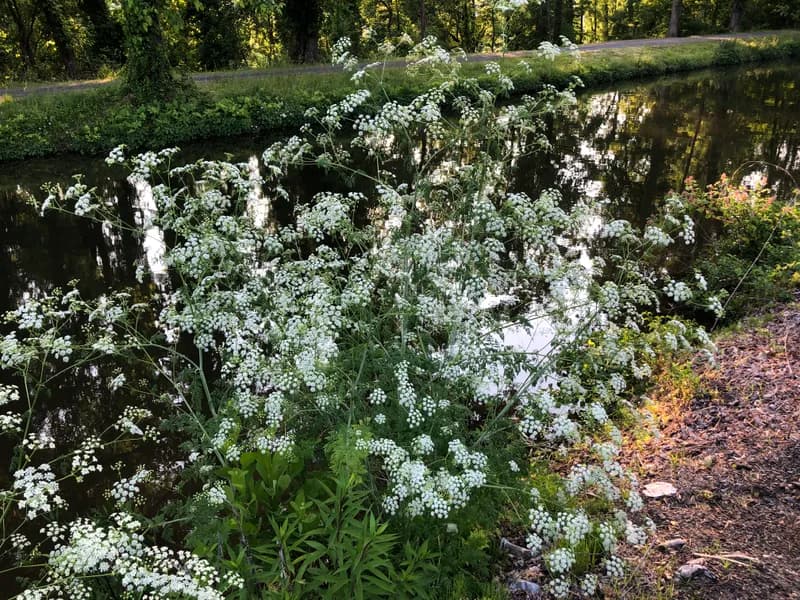
Poison Hemlock is frequently confused with wild carrot (Queen Anne's Lace) and wild parsnip, all of which share a similar white-flowered umbrella-shaped bloom — but hemlock's coniine alkaloids are lethal via respiratory paralysis, making correct identification a genuine safety issue for pets and livestock grazing near roadsides or ditches.
Plant identification
- Scientific name
- Conium maculatum
- Family
- Umbelliferae
- Also known as
- Poison Hemlock, Poison Parsley, Spotted Hemlock
- Typically found
- outdoor
Pet-safe alternatives
Advertisement
Related plants
Caraway
Carum carvi
African Wonder Tree
Ricinus communis
American Mandrake
Podophyllum peltatum
American Yew
Taxus canadensus
Andromeda Japonica
Pieris japonica
Last verified: July 2, 2026 · Cross-referenced with ASPCA Animal Poison Control