Is Poinciana Toxic to Dogs and Cats? (2026)
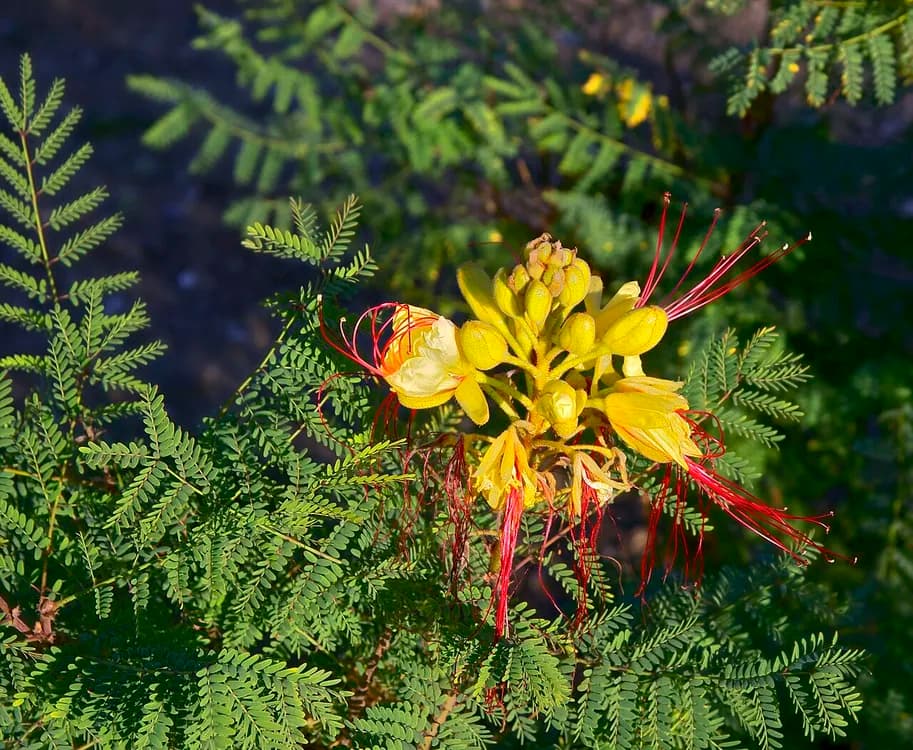
Caesalpinia gilliessi
Advertisement
Quick facts
| Toxic to dogs | Yes |
|---|---|
| Toxic to cats | Yes |
| Toxic to horses | Yes |
| Toxic component | Unidentified GI irritants, concentrated in the seed pods |
| Onset of symptoms | Within a few hours |
| Indoor / outdoor | outdoor |
If your pet ate this plant
Both lines are staffed 24/7. A consultation fee applies to each. Do not wait for symptoms to appear before calling.
Advertisement
Symptoms in dogs
- Vomiting
- Diarrhea
- Abdominal pain
Symptoms in cats
- Vomiting
- Diarrhea
- Abdominal pain
Advertisement
What to do
Contact a vet, especially if seed pods were eaten. Same species and risk profile as Peacock Flower, sold under both names.
Toxic component and mechanism
The toxic component in Poinciana is unidentified gi irritants, concentrated in the seed pods.
Part-specific risk: Seed pods are more concentrated in toxins than flowers.
What makes this plant different
Poinciana refers to the same Caesalpinia genus as Dwarf Poinciana and Peacock Flower, all sharing seed-pod-concentrated GI irritants beneath their showy tropical flowers.
Plant identification
- Scientific name
- Caesalpinia gilliessi
- Family
- Leguminosae
- Also known as
- Poinciana, Peacock Flower, Bird of Paradise, Barbados Pride
- Typically found
- outdoor
Pet-safe alternatives


Advertisement
Related plants

Alsike Clover
Trifolium hybridum

Alocasia
Alocasia spp.

Aloe
Aloe vera

Amaryllis
Amaryllis spp.

Ambrosia Mexicana
Chenopodium botrys
Last verified: July 2, 2026 · Cross-referenced with ASPCA Animal Poison Control