Is Yellow Starthistle Toxic to Dogs and Cats? (2026)
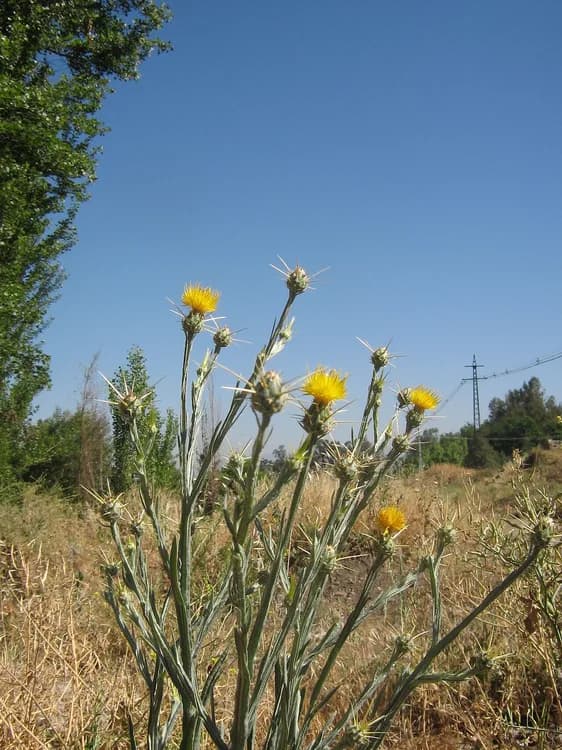
Centaurea solstitialis
Advertisement
Quick facts
| Toxic to dogs | No |
|---|---|
| Toxic to cats | No |
| Toxic to horses | Yes |
| Toxic component | Sesquiterpene lactones (cause "chewing disease" in horses, the same condition as Barnaby's Thistle) |
| Onset of symptoms | Develops after weeks to months of continuous grazing — not a single-exposure risk |
| Indoor / outdoor | outdoor |
If your pet ate this plant
Both lines are staffed 24/7. A consultation fee applies to each. Do not wait for symptoms to appear before calling.
Advertisement
Symptoms in horses
- Facial muscle spasms
- Difficulty eating and drinking
- Lip and tongue paralysis with prolonged grazing
Advertisement
What to do
A chronic grazing-exposure risk for horses (nigropallidal encephalomalacia), not established as a dog or cat hazard. This is the same condition and mechanism as Barnaby's Thistle — the two plants are closely related Centaurea species.
Toxic component and mechanism
The toxic component in Yellow Starthistle is sesquiterpene lactones (cause "chewing disease" in horses, the same condition as barnaby's thistle).
What makes this plant different
Yellow Starthistle and the closely related Barnaby's Thistle cause the identical 'chewing disease' condition in horses through weeks of continuous grazing — a slow-onset, irreversible neurological syndrome entirely different in kind from the acute poisonings most plants on this site cause.
Plant identification
- Scientific name
- Centaurea solstitialis
- Family
- Compositae
- Also known as
- Yellow Starthistle
- Typically found
- outdoor
Advertisement
Related plants

African Daisy
Gerbera jamesonii

Barberton Daisy
Gerbera jamesonii

Barnaby's Thistle
Centaurea solstitialis

Blue Daisy
Felicia amelloides

Chamomile
Anthemis nobilis
Last verified: July 2, 2026 · Cross-referenced with ASPCA Animal Poison Control