Is Jimmy Weed Toxic to Dogs and Cats? (2026)
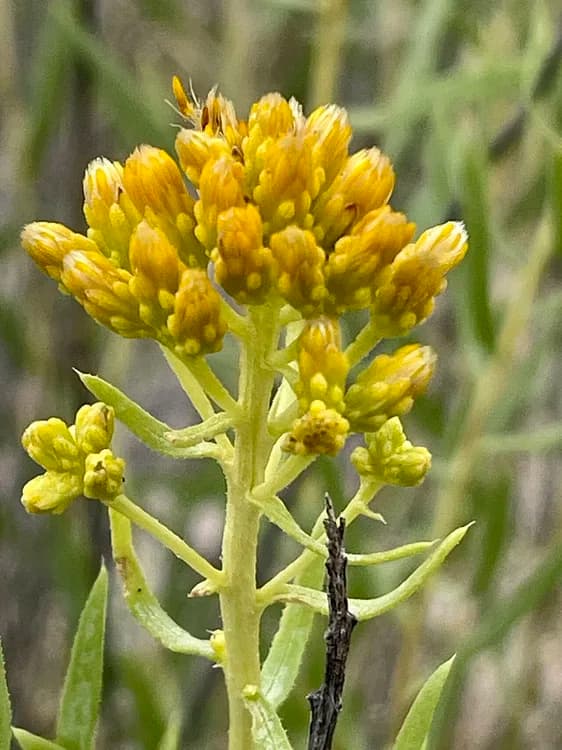
Haplopappus heterophyllus
Advertisement
Quick facts
| Toxic to dogs | No |
|---|---|
| Toxic to cats | No |
| Toxic to horses | Yes |
| Toxic component | Tremetol (also causes "milk sickness" in humans via contaminated dairy/meat) |
| Onset of symptoms | Develops over days to weeks of grazing exposure |
| Indoor / outdoor | outdoor |
If your pet ate this plant
Both lines are staffed 24/7. A consultation fee applies to each. Do not wait for symptoms to appear before calling.
Advertisement
Symptoms in horses
- Tremors
- Weakness
- Reluctance to move
- Can be fatal with sustained grazing
Advertisement
What to do
A chronic grazing-exposure hazard for livestock; not established as a dog or cat risk. Historically significant as the source of fatal "milk sickness" in humans who drank milk from animals that had grazed on it.
Toxic component and mechanism
The toxic component in Jimmy Weed is tremetol (also causes "milk sickness" in humans via contaminated dairy/meat).
What makes this plant different
Jimmy Weed's toxin, tremetol, is the same compound behind historical 'milk sickness' epidemics — humans and nursing animals could be poisoned indirectly by consuming milk or meat from livestock that had grazed on this plant, making it a rare case where the poisoning pathway extends beyond the animal that actually ate it.
Plant identification
- Scientific name
- Haplopappus heterophyllus
- Family
- Asteraceae
- Also known as
- Jimmy Weed, Burrow Weed
- Typically found
- outdoor
Advertisement
Related plants

Bachelors Buttons
Centaurea cyanus

Catsear
Hypochaeris radicata

Milfoil
Achillea millefolium

Sunflower
Helianthus annuus

White Snakeroot
Ageratina altissima
Last verified: July 2, 2026 · Cross-referenced with ASPCA Animal Poison Control